
The stage is set, the tension in the room is palpable, and a sixteen-year-old performer steps forward with a bold proposition that immediately commands the attention of everyone present, turning a simple request into an invitation to witness the impossible. With an air of absolute confidence that belies his youth, the young magician addresses the judges and the massive audience, offering a brief framing of what is about to unfold. He invites the crowd to lean in, to suspend their disbelief, and to prepare for a demonstration that he hopes will fundamentally alter their perception of reality. Standing before them with poise and a clear sense of purpose, he is not merely presenting a trick; he is orchestrating a grand spectacle, and he has brought along a dedicated group of friends from the magic circle young magicians club to help bring his ambitious vision to life. The atmosphere shifts instantly from casual anticipation to intense curiosity as the stakes of the performance become clear.

The Magic Framework
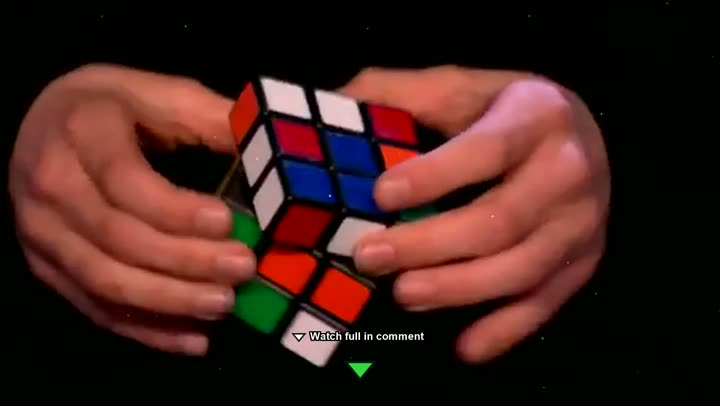
Behind the performer stands a large, imposing framework carefully constructed to contain sixteen distinct holes, each engineered to fit a Rubik’s cube with absolute precision. This physical structure serves as the centerpiece of the entire act, a visual anchor that draws every eye in the auditorium toward its geometric arrangement. The young magician explains that each of his trusted friends is currently holding one of these iconic puzzle cubes. The cubes are not mere props; they represent an infinitely complex mathematical puzzle, and the sheer scale of the setup hints at something far more intricate than a standard stage illusion. The performer emphasizes the chaotic nature of the task at hand, noting how the cubes are being randomly mixed by his friends, setting the stage for a moment of genuine audience participation that will anchor the entire routine in unpredictability and fairness.
The Random Choice
The interactive element of the performance zeroes in on the judges’ panel, specifically focusing on Amanda Holden, who holds her own Rubik’s cube in her hands. The magician instructs her to begin turning and mixing her cube freely, embracing the complete randomness of the process. At any point she chooses, she is asked to halt the mixing process and make her voice heard. When she feels the moment is right, she is directed to shout the word stop in a loud voice and hoist her cube high into the air for the entire room to see. The tension in the room ratchets up notch by notch as the clock ticks and the cubes continue to twist and turn in the hands of the participants, sealing their configurations in total secrecy and removing any possibility of pre-arrangement or advance knowledge.

Illuminating The Room
With the chaotic mixing process finalized and Amanda having locked in her chosen moment, the performer pivots the energy of the room outward, engaging the thousands of spectators seated in the audience. He issues a direct call to action, asking everyone in the auditorium who has a mobile phone to immediately switch on their device torches. The instructions are precise and urgent; the audience members are told to hold their illuminated phones high in the air, transforming the dark arena into a sprawling sea of glowing lights. This collective participation bridges the physical gap between the stage and the farthest rows of the venue, creating a breathtaking visual backdrop that amplifies the drama of the unfolding climax and sets the stage for the final, mind-bending reveal.
This remarkable sequence captures the essence of modern stage magic, blending classic puzzle elements with high-impact audience engagement and theatrical suspense. The young magician’s ability to orchestrate every moving part—from the framework and his club friends to Amanda Holden and the glowing arena—demonstrates a level of showmanship that far exceeds his years. As the lights pierce the darkness and the cubes sit locked in their mysterious configurations, the entire room holds its breath, waiting to see how this intricate web of choices and mathematics will ultimately culminate in a moment of pure astonishment.